Why Big Companies Can’t Build Disruptive Products From Within
Very often, big leading companies fail to innovate and go bankrupt in the wake of disruptive innovation. The main reason? A preference for efficiency above everything else. Let’s take a look at the case of Kodak. Did you know that Kodak was the firm that invented the digital camera? During the 1970s, engineer Steve Sasson, based on some other patents, invented the digital camera in the R&D labs of Kodak. [caption id="attachment_77103" align="aligncenter" width="401"] Source[/caption]
So why isn’t Kodak a leading brand in the digital camera industry today? Or never saw the day that became one?
The truth is that despite the invention of the digital camera from Kodak, its executives couldn't picture a world (pun semi-intended) without film. On a more practical note, they feared that the required transition to a digital camera would cannibalize their existing business. Film and paper had pretty high margins, and shareholders -being shareholders- were demanding a return on their investment.
And so Kodak never made the necessary leap forward to grow and prosper.
But where Kodal failed, other companies succeeded.
Apple didn’t create Siri, it bought it in 2010.
Facebook didn’t design Oculus VR, it purchased Oculus in 2014.
Microsoft didn’t build the #1 professional networking platform, LinkedIn, it acquired it in 2016.
Nowadays, a common way big tech companies get their hands on pioneering products and technologies is through acquisition. They like a product - they buy the product - they annex it into the organization.
💡 Read: The Big 5 Tech Companies & Their Big 5 Acquisitions
And when big companies don’t find an appropriate subsidiary company to acquire, they found the subsidiary themselves. Upon founding the subsidiary, they need to equip it with the right values, and resources. At the same time, they need to make it an independent entity.
These subsidiaries, then, will have to seek independent ways to grow. They will have to train their workers, build their own processes, and make their own decisions.
This is where growth hacking for big companies comes in.
In the absence of specialized resources, the subsidiary looking to grow is going to need consulting, training, supervision, and support. Be it a Growth Team Leader, a SaaS consultant, or a Product-led Project Manager, growth hacking agencies can give the companies the resources and knowledge they need.
Source[/caption]
So why isn’t Kodak a leading brand in the digital camera industry today? Or never saw the day that became one?
The truth is that despite the invention of the digital camera from Kodak, its executives couldn't picture a world (pun semi-intended) without film. On a more practical note, they feared that the required transition to a digital camera would cannibalize their existing business. Film and paper had pretty high margins, and shareholders -being shareholders- were demanding a return on their investment.
And so Kodak never made the necessary leap forward to grow and prosper.
But where Kodal failed, other companies succeeded.
Apple didn’t create Siri, it bought it in 2010.
Facebook didn’t design Oculus VR, it purchased Oculus in 2014.
Microsoft didn’t build the #1 professional networking platform, LinkedIn, it acquired it in 2016.
Nowadays, a common way big tech companies get their hands on pioneering products and technologies is through acquisition. They like a product - they buy the product - they annex it into the organization.
💡 Read: The Big 5 Tech Companies & Their Big 5 Acquisitions
And when big companies don’t find an appropriate subsidiary company to acquire, they found the subsidiary themselves. Upon founding the subsidiary, they need to equip it with the right values, and resources. At the same time, they need to make it an independent entity.
These subsidiaries, then, will have to seek independent ways to grow. They will have to train their workers, build their own processes, and make their own decisions.
This is where growth hacking for big companies comes in.
In the absence of specialized resources, the subsidiary looking to grow is going to need consulting, training, supervision, and support. Be it a Growth Team Leader, a SaaS consultant, or a Product-led Project Manager, growth hacking agencies can give the companies the resources and knowledge they need.
Exploring New Channels
Most of the time, big established companies have fixed user acquisition channels for their userbase. While having established channels that work sounds great, it means that big companies could be missing out on other marketing channels that work. To find these marketing channels, they need to try them first. Besides the default marketing channels, how often are big companies experimenting with other channels? That’s a rhetorical question. Big companies hardly ever experiment with anything. Early adopter communities, new media, specialized portals, and communities - big companies don’t get anywhere near these places, as they don’t know about their existence in the first place. However, these non-mainstream channels can make all the difference in the world. Here are some marketing channels, known as traction channels, that big companies may want to invest in:- Viral Marketing
- Public Relations
- Unconventional PR
- Search Engine Marketing
- Social & Display Ads
- Offline Ads
- Search Engine Optimization
- Content Marketing
- Email Marketing
- Engineering as Marketing
- Targeting Blogs
- Business Development
- Sales
- Affiliate Programs
- Existing Platforms
- Trade Shows
- Offline Events
- Speaking Engagements
- Community Building
Decreasing Costs
It’s no coincidence that growth hacking is also known as low-cost marketing. Growth hacking is about finding the most cost-effective way of doing marketing. Startups and newly found SaaS don’t have the budget, the network, the human resources -or any other kind of resources for that matter- that big companies have. Therefore, they can’t really invest in large-scale advertising campaigns. Decreasing their cost and going for the higher ROI possible is all they have. So what are these techniques we’re talking about here that big companies can learn from or even copy? Let’s see a few examples. Lead qualification: In new smaller companies, there is little room for wasting time and resources on prospects who are not very likely to convert. This is where lead qualification comes into play. Lead qualification is about determining which prospects are most likely to turn into paying customers. Otherwise, it’s very likely that you will end up spending time and money on unqualified leads which is counterproductive. Lead nurturing: The SaaS industry offered a lot to our collective knowledge regarding lead nurturing. Indeed, every part of the funnel is important, and every company, smaller or bigger, should maintain relationships with its customers at every stage of their journey.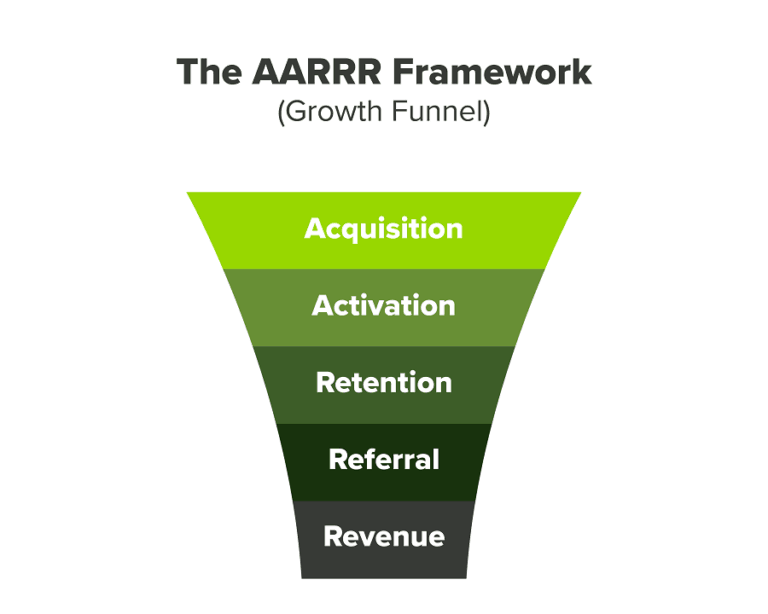 But growth hacking, through the SaaS industry taught us that retention, the act of keeping customers coming back to you, is probably the most important stage of the funnel. By increasing the Customer Retention Rate, you also decrease your marketing costs. Because, to put it simply, it’s a lot cheaper to retain an existing customer than to acquire a new one.
Marketing automation: Growth hacking tools are one of the pillars of growth hacking. Whereas big companies can scale through sheer cash and resources, smaller companies try to do so through automation. Personalization, Segmentation, Integration, Reposting, and Analytics are some of the processes growth marketers try to automate so they can put their minds and hands on things that actually require their creative thinking.
💡 Read: Growth Hacking Automation with Zapier
But growth hacking, through the SaaS industry taught us that retention, the act of keeping customers coming back to you, is probably the most important stage of the funnel. By increasing the Customer Retention Rate, you also decrease your marketing costs. Because, to put it simply, it’s a lot cheaper to retain an existing customer than to acquire a new one.
Marketing automation: Growth hacking tools are one of the pillars of growth hacking. Whereas big companies can scale through sheer cash and resources, smaller companies try to do so through automation. Personalization, Segmentation, Integration, Reposting, and Analytics are some of the processes growth marketers try to automate so they can put their minds and hands on things that actually require their creative thinking.
💡 Read: Growth Hacking Automation with Zapier
Collecting Actionable Business Insights
Unleashing the power of data
Data leads to metrics, metrics lead to KPIs, and KPIs lead to progress and growth. So first, you need to understand the data. Big established companies tend to use legacy systems, complex integrations, and a ton of different solutions. All these are leading to one thing: a lack of thorough data analysis as data is separated into various data silos. It’s very common that we see data in that way and we try jumping to conclusions without having the full dataset completed. In order to get the correct decisions, you need to make sure that your dataset has no gaps or holes. Here are some processes that can break these data silos and help you make productive decisions: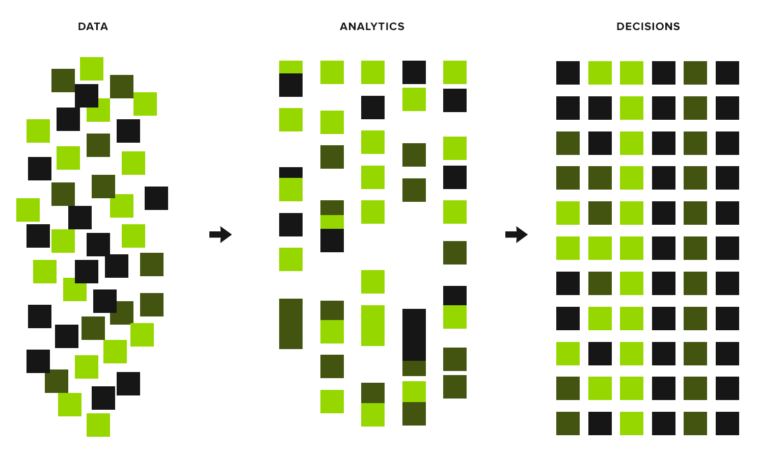
- Data Attribution: From tracking website visitors and touchpoints to matching leads to their marketing, data attribution gives you a better insight into your customer’s behavior. An attribution model is a rule or set of rules, that determines how credit for sales and conversions is assigned to touchpoints in conversion paths. Accordingly, finding the right model will help you analyze how much credit each marketing channel and customer touchpoint should receive for any given conversion.
- Data enrichment: Do you know everything you should know about your customer? Data enrichment is the process of combining first-party data from internal sources with disparate data from other internal systems or third-party data from external sources. Thanks to data enrichment, you can have stronger sales and revenue intelligence, produce better customer insights, and have improved lead scoring. Speaking of which, let's move to the next point.
- Lead scoring: Not every user counts the same. Lead scoring is a numerical value that helps you define your highest-quality leads. This way, you will be able to you focus on prospects who are more likely to convert - and save a lot of time in the process. To achieve that, you will first need to equip a suitable lead scoring model - the system that will help you evaluate and rank your leads.
- HTTP referrers: Where are your users coming from? What was the last thing they were reading before ending up on your website? When a user visits your website, the referrer gives an indication of the URL from which the visitor has arrived and you can see the domain that the user came from. In general, an HTTP referrer gives you important information in your own server log files about the domains from which visitors came to your website and the pages they visited in your domain.
Turning collected data into actionable tasks
Collecting data is one thing - turning said data into actionable tasks is what really matters. To better understand that, here’s an example of how a single piece of data can be turned into actionable tasks. You probably know what bounce rate is - it’s when a user visits a page and leaves without taking any action. Most websites see bounce rates between 25%-70%. So, let’s assume that a particular page of yours has an 80% bounce rate. What can you do with this metric? First of all, you need to challenge the result. Is this correct? Is the Google Analytics setup working as it should?
Then, you have to find out why the number is so high. To achieve that, you will have to ask many questions.
- Was the bounce rate lower in the past and changed later in time?
- Is the page loading properly?
- Is this the only page with such a high bounce rate?
- Where does traffic come from?
- Did the user scroll to the end (or to a specific % of the page) before bouncing?
- Did the user have an engagement point to engage with the page such as a form, a button, or something to interact with?
Asking the right questions can help you give the right answers to your problem. And, according to your research, you can conclude that a high bounce rate is the product of one or the combination of these factors:
First of all, you need to challenge the result. Is this correct? Is the Google Analytics setup working as it should?
Then, you have to find out why the number is so high. To achieve that, you will have to ask many questions.
- Was the bounce rate lower in the past and changed later in time?
- Is the page loading properly?
- Is this the only page with such a high bounce rate?
- Where does traffic come from?
- Did the user scroll to the end (or to a specific % of the page) before bouncing?
- Did the user have an engagement point to engage with the page such as a form, a button, or something to interact with?
Asking the right questions can help you give the right answers to your problem. And, according to your research, you can conclude that a high bounce rate is the product of one or the combination of these factors:
- Technical error / 404
- Slow-to-load page
- Non-mobile-friendly website
- Low-quality content
- Link from another website with wrong anchor text
- Bad UX
Combining Sales-led With Product-led in Large Organizations
Product-led or Sales-led?
Startups and SaaS are usually product-led, meaning they offer a self-serve product experience. On the other hand, big companies are usually sales-led organizations, meaning they are top-down enterprises. Product-led growth (or automation via GrowthHacking techniques) is cheaper, 100% digital, works via automations, supports a broader funnel, and has a persistence humans do not have that often (without being annoying). On the contrary, sales-led has the power of human interaction, but it’s expensive. Although it's more converting in selected/ pre-qualified customers it ends up converting less in the absence of a well-thought script or user scenarios. But here’s the thing: you don’t need to select one over another. Enter the hybrid sales model that combines product-led & sales-led. A sales cycle can include a mix of sales-led and product-led. A successful sales cycle can look like this: Lead generation (PL) > Lead qualification (PL) > First interaction (SL) > Nurturing (PL) > Product Demonstration (SL) > Closing (SL). Sales and Growth Hacking can go hand in hand. Combining the two PLG and SLG approaches results in taking the best of the two worlds that used to be very different.The myth of the product that sells itself
Whether you need a sales team or not mostly depends on the product category you are in and also on the price level of your product (high ticket or low ticket products). There are some categories that can get you very far with a self-served-only model. So it's not so much about the product as about the category you are in. In general, a decision to not have a sales team means that you are probably missing out on a lot of potential growth. Take a look at your CLV (Customer Lifetime Value) and reconsider if the engagement of the sales team would bring more sales. To do that you need to calculate the potential revenue of the customer.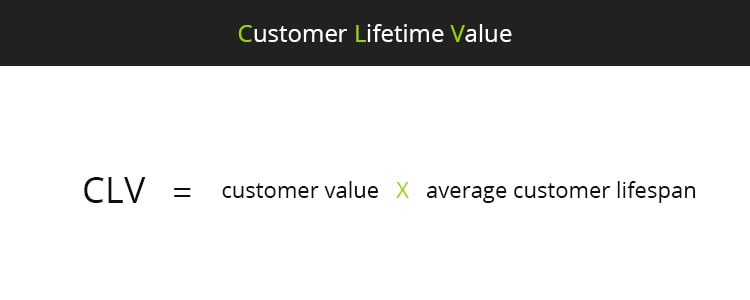 For example, if a customer stays with you for 10 months and pays you $10 a month, then the CLV is $100. Let us not forget that acquiring this customer cost you money as well. If it requires ads of $20 and a 30’ discovery session with an SDR that comes at a cost of $50 per hour (thus $25 for the 30’ call), then you already have a total cost per acquisition of $45 out of the $100 profit. Then comes the margin of the product itself. Taking that under consideration and adding the profit you wish to have, will give you the answer to whether sales teams are viable or not.