Running a professional community teaches you a great deal about human behavior.
It is easy to interpret every misplaced post, ignored instruction or promotional message as a lack of respect. Sometimes it is. But most of the time, the explanation is less dramatic.
People arrive with different experiences, expectations and levels of familiarity with technology. Some have participated in professional communities for years. Others treat every online space like LinkedIn, a Facebook group or a discussion forum. What feels obvious to the community team may be completely unfamiliar to a new member.
People are also busy. They do not have time to learn the logic of every new platform they join. They scan, make assumptions and try to complete what they came to do as quickly as possible.
That means everything must be extremely simple. Instructions must be short, timely, repetitive and visible at the exact moment someone needs them. If an important rule appears only once during onboarding, it effectively does not exist.
After years of running the GrowthHackers Community and observing how thousands of professionals join, consume, contribute and interact, these are the ten lessons that have stayed with me.
1. Publishing rules does not mean people will follow them
Members do not always follow community rules, but this does not necessarily mean they joined with the intention of ignoring them.

They may have read the rules quickly and forgotten them. They may have understood them differently. They may assume that the conventions of another platform apply here. They may also be so focused on completing their immediate goal that they do not stop to consider the wider community.
Of course, there are cases where someone knowingly chooses to ignore a rule. But treating every mistake as a deliberate act creates the wrong relationship between the community and its members.
The better lesson is that rules cannot live only on a guidelines page. They need to appear when they are relevant. If promotional content belongs in a specific area, the platform should suggest that area while the member is writing. If a similar discussion already exists, the system should show it before another thread is created.
Good community design makes the correct action the easiest action.
2. Everyone joins for a different reason
People rarely join a professional community because they want to help build the community itself.
Some want to learn. Some want inspiration. Others are looking for collaborators, customers, career opportunities or new professional relationships. A few join without having a clear idea of what they are looking for.
If I had to estimate the dominant motivation, I would say that around 80% join because they hope the community can help them achieve something.
That is not a negative observation. It is the reason professional communities exist.
The challenge is helping members understand that the best way to receive value is usually to participate in a way that also creates value for others. This is not always obvious to someone who has just joined. The community needs to demonstrate it through examples, prompts and visible success stories.
3. Instructions need to appear at the moment of action
We have created dedicated spaces where members can promote their companies, present products, request feedback or ask other members for support.
The instructions are clear from our perspective. Yet a large percentage of members still publish in the wrong place, use the wrong format or provide too little context for others to respond.
The easy conclusion would be that people do not read. The more useful conclusion is that people read selectively.
They are usually trying to complete a task while thinking about several other things. They do not want to stop and study how the platform works. Even instructions designed for their benefit can feel like an additional obstacle.
Important guidance therefore needs to be simple, repeated and placed directly in the user’s path. The title field can include an example. The post editor can suggest a structure. AI can review the content before it is published and recommend the most appropriate space.
If three quarters of members repeatedly misunderstand an instruction, the problem is probably not just the members. It may also be the experience we designed.
4. Learning how to “read the room” takes time
When you enter a physical room full of people you do not know, you normally observe before joining the conversation.
Online, this social context is much harder to see.
A new member may not know which conversations are valued, how formal the space is or what kind of contribution is considered useful. They may not understand that the best way to become visible is to complete their profile, follow relevant people, read existing discussions, react to useful posts and contribute genuinely.
Instead, they may publish a direct promotional post because that is how they have learned to use other platforms. From their perspective, they are introducing themselves. From the community’s perspective, they may be creating noise.
The role of the community is not only to remove inappropriate content. It is to teach members how the room works.
That requires examples, recommendations and gentle intervention. New members should be shown what a valuable first contribution looks like, rather than simply being told what they cannot do.
5. Respect is not always understood in the same way
What one member considers normal promotion may feel intrusive to someone else.
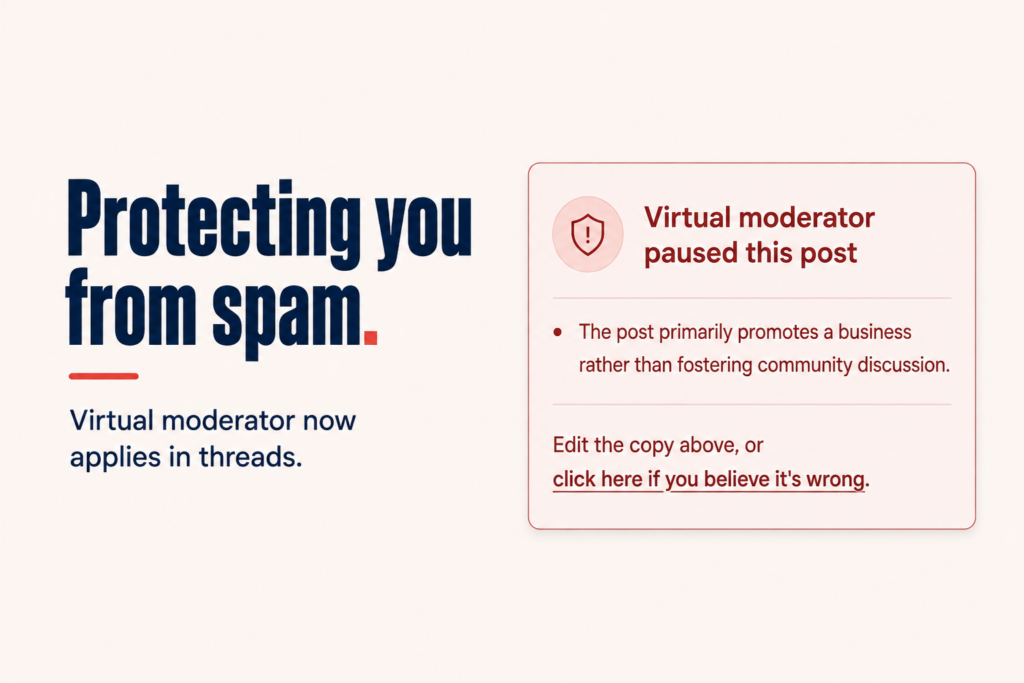
Unsolicited messages, unrelated links and promotional replies can consume the attention of other members. But the person posting them may not immediately understand the effect. They may be applying tactics that worked elsewhere or following advice that encouraged them to be more visible.
This does not mean that every behavior should be accepted. A community still needs boundaries. But those boundaries should be explained through the impact on other members, not presented only as a list of restrictions.
When people understand that every irrelevant post competes with a useful discussion, the rule becomes easier to understand. Moderation then feels less like punishment and more like protection of the shared space.
6. Many members will never participate publicly
Every community has silent members.
They read posts, open emails and follow discussions, but they may never clap, comment, reply or publish anything themselves.
This does not necessarily mean they are disengaged. Some people are naturally more comfortable observing. Others may not feel confident enough to contribute. Some do not have the time to formulate a public response, even when they find the content useful.
They may apply what they learn, contact someone privately or return months later when they finally have a relevant question.
Community health cannot therefore be measured only through visible activity. Public engagement matters, but so do reading patterns, repeat visits, email activity and the quieter ways in which people receive value.
7. Different members need different experiences
Treating everyone identically can appear fair, but it does not always produce a useful experience.
A first-time member needs guidance. A regular contributor needs recognition and fewer interruptions. Someone interested in finding collaborators needs different recommendations from someone who joined to learn. A member who consistently contributes useful content should not have to navigate the same level of noise as someone who has not yet learned how the community works.
This does not mean creating a privileged class or punishing less active members. It means recognizing that people have different needs, intentions and levels of familiarity.
Members can be clustered according to their interests, behavior and contribution patterns. The platform can then provide different prompts, content, features and opportunities to each group.
Personalization is not only about convenience. It is how a large community remains relevant.
8. People are busy, and your community is not at the top of their minds
Even members who genuinely value the community have jobs, businesses, clients, families and dozens of platforms competing for their attention.
They will not return simply because the community exists. They may not even remember to return.
The community must continue giving them relevant reasons to come back. This could be a useful conversation, a business opportunity, a new introduction, an event, a response to their post or content that helps them solve a current problem.
Email digests and notifications are important, but only when they are relevant. More communication does not automatically create more engagement. The message needs to show the member why returning is worth their limited time.
The goal is for the community to become a useful part of their business life, not another feed they feel guilty for ignoring.
9. Members should not be expected to understand the system
Members will open a new thread when they could have replied to an existing one. They will post publicly when a direct message would be more appropriate. They will choose the wrong category, use an unclear title or continue a conversation in an unexpected place.
That is normal.
The community team understands the platform because it works with it every day. Members do not. They should not need to learn its entire structure before they can participate.
The solution is to create systems that quietly handle the housekeeping. Threads can be moved or merged. Categories can be suggested automatically. Public messages can be redirected. AI can identify an existing conversation and recommend replying to it.
The best community infrastructure corrects small mistakes without making people feel that they have failed a test.
10. Running a community requires a serious investment
A large community is not a side project.
It requires time to moderate discussions, welcome members, create content, respond to questions, resolve conflicts, organize activities and encourage meaningful participation.
It also requires money. A community with tens of thousands of members needs a capable platform, email infrastructure, moderation tools, analytics and people who can operate the entire system.
But the largest investment may be the effort required to make participation feel simple.
Behind every simple member experience is a great deal of invisible work. Someone needs to design the onboarding, create the prompts, improve the notifications, organize the content, clean up discussions and make sure members continue finding something relevant.
Technology can reduce this workload, but it does not remove the need for thoughtful community management.
Why members do not always behave as we expect
It is easy to assume that someone who ignores an instruction, posts in the wrong place or promotes themselves too quickly is trying to fool the system.
Sometimes that happens. Most of the time, however, people simply arrive with different references.
They may not be familiar with community platforms. They may not understand the difference between a thread, a reply and a direct message. They may come from online environments where frequent self-promotion is normal. They may be using the platform in a second language. They may also be checking the community between meetings, from their phone, with only a few minutes available.
As community operators, we cannot design only for people who already understand our preferred behavior.
We need to explain things repeatedly, without becoming repetitive in an annoying way. Guidance needs to be visible, contextual and extremely simple. The platform should remind people what to do at the moment they are about to do something else.
If members keep making the same mistake, we should not only ask why they are not listening. We should also ask why the system keeps allowing the mistake to happen.
How we can build better communities
The answer is not to create longer guidelines or hire enough moderators to inspect every interaction manually. A modern community needs to be designed around how people actually behave.
Self-moderation can allow trusted members to protect the spaces they value. AI can suggest the correct category, improve a post before publication, identify overly promotional content and recommend an existing discussion.
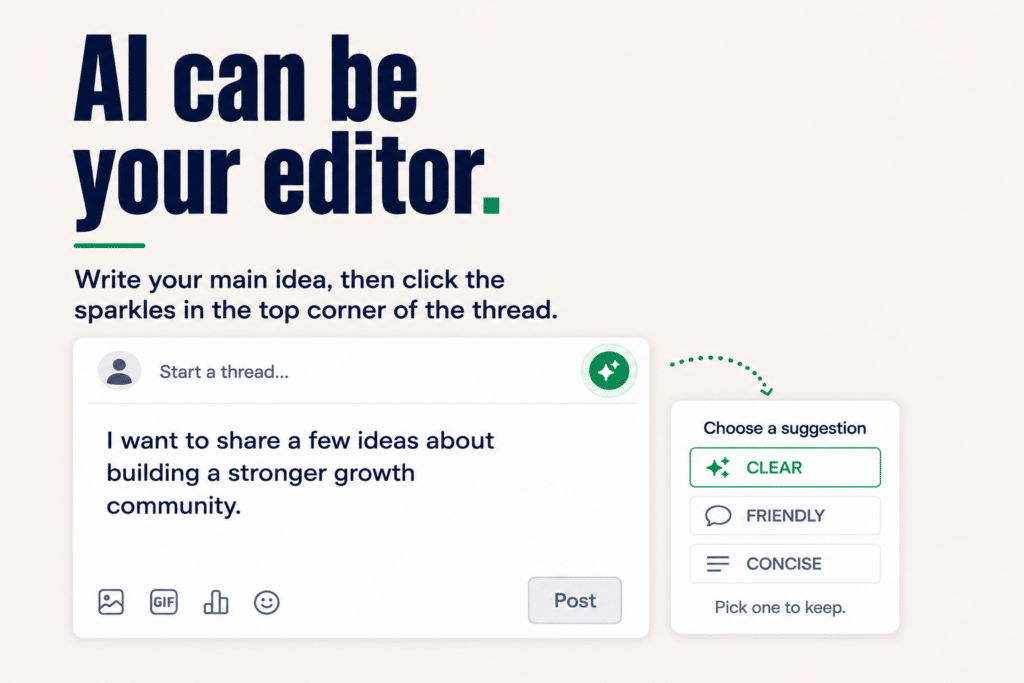
Members can be clustered according to their interests, needs and participation patterns. New members can receive more guidance, while experienced contributors can access more focused conversations and opportunities.
Email digests can bring people back by showing them what is genuinely relevant to them. Push notifications and emails can alert authors when someone replies, mentions them or engages with their contribution.
Most importantly, the community must continuously deliver something that helps members grow. Useful content is part of that, but so are introductions, collaborations, feedback, events and opportunities that members cannot easily find elsewhere.
The future of community management is not more rules. It is better guidance, better personalization and better systems.
A successful community does not expect every member to arrive knowing how to behave. It makes valuable participation obvious, simple and worthwhile.
Frequently asked questions
Why don’t community members always follow the rules?
Usually because they are busy, unfamiliar with the platform, or interpreting the rules through habits learned elsewhere. Good community design does not rely on members remembering a guidelines page. It places short, relevant guidance at the moment of action.
How do you increase participation in an online community?
Make valuable participation obvious and easy. Show members what a good contribution looks like, recommend relevant discussions, provide timely prompts, and make it clear how participating can help them achieve their own goals.
How should community engagement be measured?
Visible activity is only part of the picture. Comments, posts, and reactions matter, but so do reading behavior, repeat visits, email engagement, private conversations, and whether members return when they need help or information.
Why is personalization important in community building?
Different members have different goals, interests, and levels of experience. New members may need more guidance, while regular contributors may need fewer interruptions and more relevant opportunities. Personalization helps a large community remain useful instead of becoming noisy.
What makes a successful online community?
A successful community consistently gives members a reason to return and makes useful participation simple. That requires clear guidance, relevant content, good moderation, personalization, thoughtful infrastructure, and opportunities that help members learn, connect, or grow.
[elementor-template id="83210"]